

Garage Sliding Doors for Tight Spaces

When you’re working with a garage that has low headroom, awkward ceiling angles, exposed beams, or just not enough clearance for a traditional roller door, a sliding garage door can be the clean, practical solution.
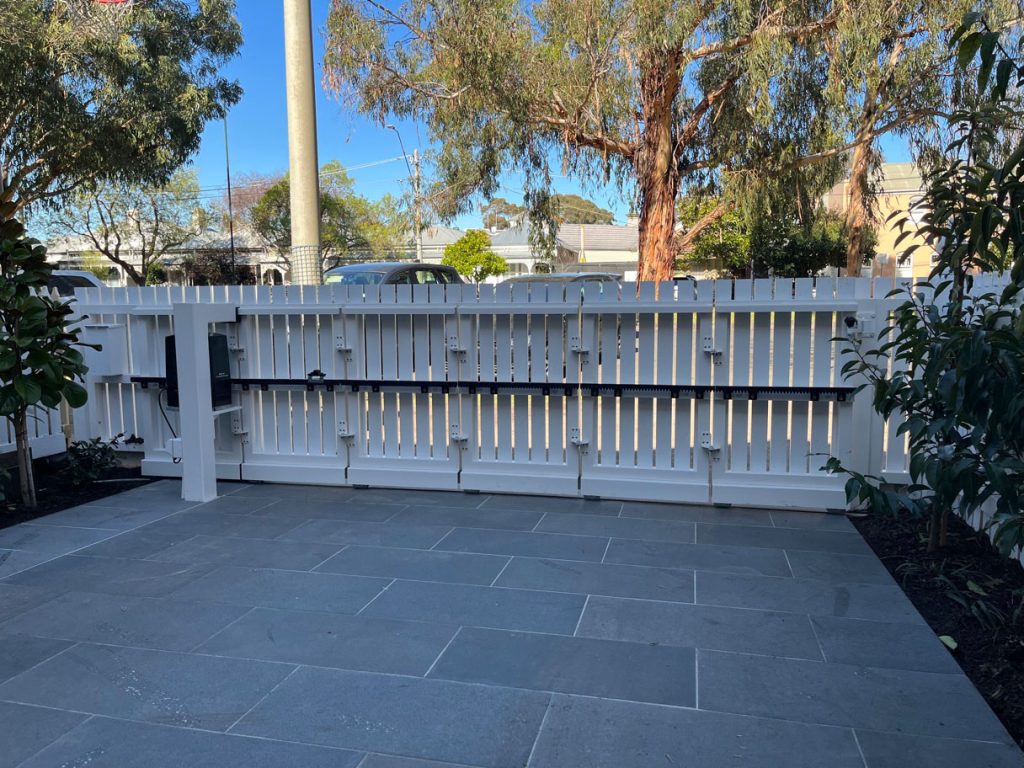
Instead of traditional roller or tilt type doors, a sliding door moves sideways along a track and parks neatly against a wall. That means no bulky roll, no high lintel requirement, and far fewer “this won’t fit” conversations. We can achieve this with a standard floor track setup, or as a top hung setup with no track across the driveway.

What is a sliding garage door?
A sliding garage door is a door system that opens horizontally, running on a track (or tracks) so the panels glide to one side.
Depending on the build, a sliding garage door can be:
-
Single-panel (one large door that slides sideways)
-
Sectional side-sliding (multiple linked panels that follow a track and “stack” along the wall)
-
Double split (two doors that slide away from the centre, one to each side)
-
Telescopic 2 doors that slide to one side, stacking behind each other when side room is limited (2 or 3 panel options are possible)
They’re common in garages where overhead space is restricted, and they also suit modern designs where a clean ceiling line is important.
When a sliding door is the better choice
Sliding garage doors shine when:
Low headroom or ceiling obstructions
If you’ve got ducting, a low beam, storage racks, or a sloping roof line, a roller door may not have enough overhead space to roll up cleanly.
You want to keep the ceiling clear
No drum, no overhead tracks, no torsion springs mounted high. Great if you want to use the ceiling for lighting, storage, or just to keep things tidy.
The opening is wide and you want smooth operation
Side sliding systems can be very stable, especially with proper guide tracks and quality rollers.
You want a “different” look
Sliding doors can look more architectural and less “standard garage”, especially when finished in timber-look, composite cladding, or custom colours.
Key benefits of sliding garage doors
-
Works in tight spaces with limited headroom
-
Cleaner ceiling line (no overhead roll mechanism)
-
Smooth and quiet with the right track/roller system
-
Automation-friendly (yes, you can motorise side-sliding doors)
-
Flexible designs from minimalist to bold architectural finishes
Things to consider before you choose one
Sliding garage doors are brilliant, but they’re not a magic trick that ignores physics. A few practical points:
You need wall space to “park” the door
Because it slides sideways, you’ll need enough clear wall area inside (or outside) the garage for the door to travel. Sectional sliding doors are able to turn corners, though still need wall space, it just does not need to be in the same line as the finished door.
Tracks and guides matter
A good system uses quality rollers and a well-aligned track. Cheap hardware can feel rough, get noisy, or wear faster.
Wind load and sealing
Sliding doors can be well sealed, but the sealing approach is different to a typical garage door. If your garage is exposed to wind or weather, it’s worth investing in proper perimeter seals and a robust guide system. If your door requires sealing, let us know as this is an optional extra.
Security and locking
A sliding door is a very secure way to give your property additional security. Generally the structure provides a much more solid approach than your typical garage door frame.